


Graz
Graz is Austria's second-largest city and arguably its most underrated — a UNESCO World Heritage old town wrapped around the Schlossberg, a wooded hill with a clock tower, a fortress ruin, and the world's tallest underground slide. Give it 2–3 days: the old town and Schlossberg on one day, the biomorphic Kunsthaus Graz and Eggenberg Palace on the other. It's about 2.5 hours from Vienna by direct Railjet, and noticeably calmer and cheaper than the capital.
Graz gets skipped by most first-time Austria itineraries, and that's exactly why it's worth going — a full UNESCO World Heritage old town, a genuinely strange piece of contemporary architecture, and one of the country's best food scenes, all with a fraction of Vienna's crowds and a noticeably lower price tag.
How many days do you need in Graz?
Two days covers the highlights: one for the Schlossberg and the old town (the Hauptplatz, the Landhaus, the cathedral), one for the Kunsthaus and Eggenberg Palace. Add a third day if you want to properly eat your way through Styria's food and wine scene, which genuinely rewards slowing down.

The Schlossberg — Graz's hill in the middle of everything
A 473-metre wooded hill right in the city center, topped by a fortress that Napoleon ordered destroyed in 1809 (only the clock tower and bell tower survived) and now reimagined as a park with sweeping views over the old town's terracotta rooftops. Get up via a funicular, a glass elevator through the rock, or the steep 260-step staircase — and once you're up there, don't miss the world's tallest underground slide (64m tall, 175m long, reaching about 30 km/h on the way down), built into the hill itself.
The Schlossberg slide is genuinely worth the small fee even without kids — it's a strange, fun five minutes that most visitors don't expect from a 1,000-year-old fortress hill. Bring a few euros in cash for the elevator and slide tickets rather than relying on cards at the smaller kiosks.
Kunsthaus Graz — the 'Friendly Alien'
A biomorphic, deep-blue contemporary art museum that looks like nothing else in the old town around it — locals nicknamed it the 'Friendly Alien' for good reason. Inside: rotating contemporary and modern art exhibitions, and a top-floor viewing platform (the 'needle') with one of the best views of the old town's rooftops and the Schlossberg above them.
Eggenberg Palace
A Baroque palace on the edge of the city, itself a UNESCO World Heritage site (added in 2010, alongside the old town) — 365 windows, one for each day of the year, a genuinely elaborate Planetary Room, and formal gardens that are free to walk even if you skip the paid palace tour.
The old town on foot
- Hauptplatz — Graz's main square, the natural starting point for exploring on foot.
- Landhaus — a Renaissance courtyard building, one of the old town's architectural highlights.
- Graz Cathedral (Domkirche) — a Gothic cathedral with a quietly impressive Baroque interior.
- Mur Island (Murinsel) — a striking modern half-island, half-bridge structure on the Mur river, with a small café and amphitheater.
Styrian food — Austria's other culinary capital
| Dish | What it is |
|---|---|
| Kürbiskernöl (pumpkin seed oil) | Styria's signature product — a dark, nutty oil drizzled over salads and soups, sold everywhere as a souvenir |
| Steirisches Backhendl | Styrian-style fried chicken, a regional classic worth seeking out over a generic schnitzel |
| Sturm | A cloudy, lightly fermented young wine sold only in autumn — a genuinely local seasonal drink |
| Kürbissuppe | Pumpkin soup, usually finished with a swirl of the region's own pumpkin seed oil |
Graz sits at the edge of Styria's wine and pumpkin-farming country, and the city's food scene leans into that — expect casual meals to run about the same €12–20 as the rest of Austria, but with noticeably more pumpkin-seed-oil and regional-wine flourishes than you'll see in Vienna.
Getting to Graz
| From | Method | Approx. time |
|---|---|---|
| Vienna | Direct Railjet, about 40 trains a day | ~2.5 hours |
| Salzburg | Train, one change | ~3.5 hours |
| Vienna Airport | Direct train or bus | ~2.5–3 hours |
Since March 2026, Westbahn has been running its own faster Stadler Smile trains (up to 250 km/h) on the Vienna–Graz route alongside ÖBB's Railjet — genuine competition on this line now, which is good news for both prices and frequency. Compare both operators when booking rather than defaulting to ÖBB out of habit.
Best time to visit
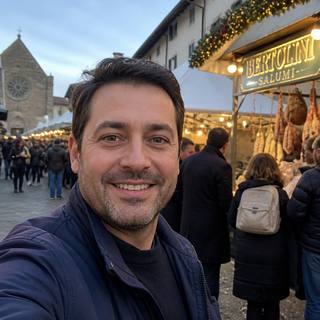
May–June and September–October are ideal — mild weather for walking the old town and the Schlossberg, and (in autumn) fresh Sturm wine on menus across the city. Graz's Christmas market, centered on the Hauptplatz and Landhaus courtyard, is also a genuinely worthwhile, much less crowded alternative to Vienna's in December.
Mistakes to avoid
- Treating Graz as a rushed day trip from Vienna — the train alone eats 5 hours round trip, and the city has enough for a proper 2-day stop.
- Skipping Eggenberg Palace's gardens because the paid palace tour looks like too much time — the free gardens alone are worth the short tram ride out.
- Missing Sturm wine because you don't recognize the name — it's only sold in autumn, and it's a genuinely distinctive, easy-to-miss regional specialty.
Where to stay in Graz — hotels
Check live availability and prices for hotels, resorts, and guesthouses in Graz on Booking.com:
Search hotels in Graz on Booking.com ←We may earn a small commission, at no extra cost to you.