


German Food & Beer Culture: What to Eat and Drink
German food is regional and hearty, not just 'sausage and beer' — think Bavarian Schweinshaxe, Rhineland Sauerbraten, and Berlin currywurst. A casual meal runs €12–18, a beer hall dinner with a liter of beer €20–30. Beer culture has real etiquette: order the local style (Kölsch in Cologne, Helles in Bavaria), and know that in a Munich beer garden you can bring your own food to the unreserved tables.
Germany's food reputation abroad undersells it — 'sausage and beer' is real, but it's also a country of genuinely distinct regional cuisines, a beer culture with actual unwritten rules, and some of Europe's best bakery and pastry traditions hiding in plain sight. Here's what to order, how not to look like a first-timer at a beer hall, and roughly what it all costs.
Must-try dishes
| Dish | What it is | Approx. price |
|---|---|---|
| Currywurst | Sliced sausage with curry-spiced ketchup, a Berlin invention | €3–6 |
| Schweinshaxe | Roasted pork knuckle, crispy skin, a Bavarian classic | €16–24 |
| Sauerbraten | Marinated, slow-braised pot roast, usually with red cabbage | €14–20 |
| Käsespätzle | Egg noodles baked with cheese and fried onions — Germany's answer to mac and cheese | €10–15 |
| Pretzel (Brezel) | The real thing, warm, with butter — a proper snack, not a stadium version | €2–4 |
Beer culture — the unwritten rules
In a Munich beer garden, look for the unreserved tables (without tablecloths) — you're allowed to bring your own food there, a genuine protected local tradition, though you're expected to buy your beer from the counter. In Cologne, a Kölsch server keeps bringing fresh small glasses until you place your coaster on top of the empty one. In Bavaria generally, ordering a large 'Maß' (1 liter) is completely normal even for a first round.
- Helles — a pale, malty lager, Bavaria's everyday beer.
- Kölsch — light, crisp, unique to Cologne, served in small 0.2L glasses.
- Weissbier / Hefeweizen — cloudy wheat beer, banana-and-clove notes, often served with a lemon slice (controversial among purists — order it plain if you want to look local).
- Rauchbier — a smoked beer specialty from Bamberg, an acquired taste worth trying once.
Dietary needs
Vegetarian and vegan travelers do well in bigger cities, especially Berlin, which has one of Europe's largest vegan food scenes. Rural and traditional restaurants can be meat-heavy with fewer options, so it's worth checking a menu online first outside major cities. Halal food is widely available in cities with sizable Turkish-German communities (Berlin's Kreuzberg is a standout for excellent Turkish and halal food). Gluten-free options have expanded significantly, though traditional bread and pretzel culture makes strict gluten-free travel more effort than in some other countries.
What it costs, all in
| Meal type | Price per person |
|---|---|
| Street food / bakery snack | €3–6 |
| Casual restaurant | €12–18 |
| Beer hall meal with a liter of beer | €20–30 |
| Nice sit-down dinner | €30–50+ |
Where to find the best food
- Munich's Viktualienmarkt — a permanent open-air food market with stalls for nearly every regional specialty, plus its own beer garden.
- Berlin's Kreuzberg — arguably the best Turkish-German food anywhere outside Turkey, especially around Kottbusser Tor and the Turkish Market on Maybachufer.
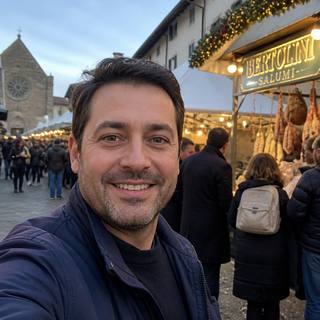
- Any Christmas market, if your dates line up — mulled wine, roasted almonds, and regional stall food is half the point of visiting one.
Common mistakes
- Ordering a lemon slice in your Weissbier without knowing purists consider it a tourist tell — order it plain if you want to blend in, though plenty of Germans do it too, so it's a minor thing either way.
- Assuming every restaurant takes cards — smaller, traditional Gasthäuser and market food stalls are frequently cash-only; carry euros as a backup.
- Skipping the Mittagstisch (lunch special) window because you're used to dinner being the main event — many restaurants offer their best value between 11:30am and 2:30pm, then switch to full dinner pricing.