


Gwangjang Market & Seoul's Best Street Food
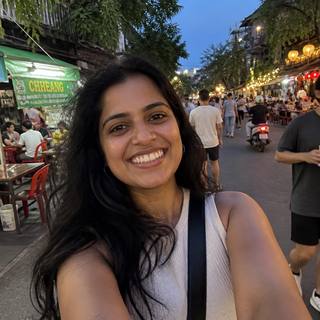
Gwangjang Market, open since 1905 and Seoul's oldest surviving traditional market, is the single best street-food stop in the city — go for mayak gimbap (tiny, addictive seaweed rice rolls, about $3-4 for a plate of 8-10), bindaetteok (crispy mung bean pancakes, $5-8), and yukhoe (Korean-style raw beef tartare, $15-20). It's busiest and most fun in the evening; Myeongdong's street-food alley is flashier and more tourist-facing but shallower in substance.
If you only eat street food in one place in Seoul, make it Gwangjang Market — a real, working traditional market since 1905 where vendors have been perfecting the same handful of dishes for generations, not a pop-up stall aimed at tourists.
What makes Gwangjang different
Gwangjang Market predates most of what people picture as Korean street food by decades — it started as a textile and fabric market and grew its food section organically around the vendors and workers who needed a fast, cheap meal. That history shows: the food stalls here are run by the same families for years, sometimes decades, and the dishes are tuned for locals, not Instagram.
What to order
| Dish | What it is | Approx. price |
|---|---|---|
| Mayak gimbap | Tiny, crustless seaweed rice rolls dipped in mustard-soy sauce — the market's signature dish | $3-4 for a plate of 8-10 pieces |
| Bindaetteok | A thick, crispy pancake made from ground mung beans, often with pork and vegetables | $5-8 per pancake |
| Yukhoe | Korean-style raw beef tartare, served with a raw egg yolk and Asian pear | $15-20 per portion |
| Sundae | Korean blood sausage, usually served with a side of liver and lung | $4-6 per plate |
| Bugeopo (dried pollock) and other banchan stalls | Side-dish and dried-goods vendors selling by weight | Varies by weight |
'Mayak' literally means 'drug' in Korean — the gimbap earned the name because it's supposedly addictive, not because it contains anything unusual. It's genuinely one of the best-value bites in the entire city; a full plate for two or three people rarely runs more than $4-5 total.
How to actually eat there
- Walk the food alley first before committing anywhere — most stalls sell overlapping dishes, and you'll want to compare a few before sitting down.
- Sit at a shared communal bench; it's normal to eat shoulder-to-shoulder with strangers, and the vendor will usually point you to an open spot.
- Order a few small dishes across 2-3 stalls rather than one big meal at one stall — grazing is the whole point.
- Have cash on hand; while cards are more accepted than a few years ago, some of the smaller individual vendors still prefer cash for quick transactions.
Hours and best time to go
Gwangjang Market's food section runs roughly 9am-10pm daily (some stalls close a bit earlier, others push later), with most locals agreeing evenings (after 6pm) have the best energy — that's when the market fills up with after-work crowds and the stalls are at full, fast-moving speed. Weekday evenings are noticeably calmer than weekends if you'd rather avoid the biggest crowds.
Gwangjang vs. Myeongdong's street food alley
| Gwangjang Market | Myeongdong street food alley | |
|---|---|---|
| Vibe | Real working market, mostly local diners | Tourist-dense, flashier presentation |
| Food style | Traditional dishes, decades-old recipes | Trend-driven — cheese-everything, lobster tails, giant skewers |
| Price | Genuinely cheap, local pricing | A noticeable tourist markup on many stalls |
| Best for | An authentic, sit-down-ish street food meal | Quick grazing between shopping, photogenic snacks |
Getting there
Gwangjang Market sits right by Jongno 5(o)-ga Station (Line 1), Exit 7-8 — about a 3-minute walk. It also pairs naturally with a visit to nearby Dongdaemun or a walk along the Cheonggyecheon stream.
Common mistakes
- Going at lunchtime expecting the full evening atmosphere — the market is functional but noticeably quieter mid-afternoon on weekdays.
- Filling up on one stall's dish instead of grazing across several — the whole appeal is trying 4-5 different small things.
- Skipping Gwangjang because Myeongdong's alley is more famous — Myeongdong is flashier, but Gwangjang is the deeper, more authentic experience for the same or less money.