


Mistakes First-Timers Make in Germany (And How to Avoid Them)
The biggest first-timer mistakes in Germany: assuming Sunday is a normal shopping day (almost all retail is closed by law), assuming cards work everywhere (many small places are cash-only), trusting a tight train connection (Deutsche Bahn's long-distance punctuality sat around 60% for all of 2025), jaywalking on an empty street, and not knowing about the Pfand bottle-deposit system. None of these ruin a trip once you know about them in advance — that's the whole point of this list.
Most of these mistakes cost you nothing but a moment of confusion — a closed shop, a missed connection, an odd look from a local. A few of them cost real money or real time if they catch you off guard. Here's the honest list, gathered from the same mistakes first-timers make over and over.
Mistake #1: Assuming Sunday is a normal shopping day
By law, almost all retail stores are closed on Sundays across Germany (the Ladenschlussgesetz). Restaurants, cafes, museums, and gas stations stay open, so you won't go hungry — but grocery shopping, pharmacy runs, and general errands need to happen on Saturday or you'll be stuck waiting until Monday.
Mistake #2: Assuming cards work everywhere
Despite Germany's tech-forward reputation, plenty of small restaurants, bakeries, market stalls, and traditional pubs are cash-only, or have a minimum card-purchase amount. Carry at least €30–50 in cash at all times as a buffer, especially outside big cities.
Mistake #3: Booking a tight train connection
Deutsche Bahn's long-distance punctuality has genuinely declined — 2025's full-year figure sat around 60%, with some individual months (October 2025) dipping to 48.5% on-time. Build a real 30–45 minute buffer into any connection that matters, especially before an international flight, and consider a flexible or refundable ticket if the stakes are high.
Mistake #4: Jaywalking on an empty street
Waiting for the green pedestrian signal, even with zero visible traffic, is a genuine social norm here — especially around children, who locals feel shouldn't see an adult cross on red. It can technically carry a small fine (roughly €5–10) if a police officer sees it, though the social pressure is usually the bigger deterrent than the money.
Mistake #5: Not knowing about Pfand
Most bottled and canned drinks include a small deposit (Pfand, typically €0.08–0.25) in the purchase price, refundable at a reverse-vending machine (Pfandautomat) in any supermarket. Skipping this isn't a huge loss on one drink, but it adds up over a trip, and not knowing it exists is a common source of confused first-timer moments at the checkout.
Mistake #6: Assuming the Autobahn is always unrestricted
The famous no-speed-limit stretches are real, but they're not everywhere — near cities, through construction zones, and on many curves and merges, posted speed limits apply and are enforced with real cameras and real fines. Drive to the actual signage, not the reputation.
Mistake #7: Walking up to Neuschwanstein or the Reichstag without booking ahead
Both are genuinely walk-up-unfriendly in peak season — Neuschwanstein's same-day ticket allotment sells out by mid-morning May through September, and the Reichstag's glass dome requires online registration with passport details, ideally submitted days ahead in summer. See our full guides to each for the exact booking steps.
Mistake #8: Assuming everyone speaks English
English is widely spoken in cities, hotels, and by younger Germans especially — but it's noticeably less universal in rural areas and with older generations. A handful of basic German phrases (please, thank you, excuse me, do you speak English?) go a long way and are genuinely appreciated.
Mistake #9: Tipping like it's the US
German tipping is modest and rounded, not percentage-based American-style — add roughly 5–10% by telling your server the total including tip when you pay, rather than leaving cash on the table. Overtipping heavily doesn't read as generous so much as slightly odd.
Mistake #10: Packing for only one season
Weather shifts fast, especially in Hamburg and the north (a North Sea/Elbe-estuary climate closer to the UK's than Munich's more continental one) — pack a light rain layer regardless of season, and add a warm layer for any Alpine day trip even in summer.
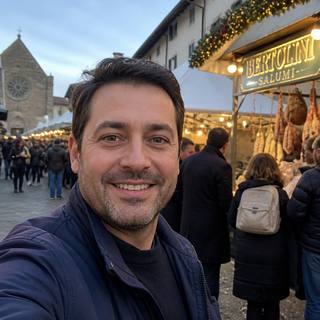
Mistake #11: Underestimating Oktoberfest and Christmas market crowds
Both draw genuinely massive numbers, and hotel prices spike hard if your dates overlap either one — Munich accommodation can double or more during Oktoberfest specifically. Book well ahead if your trip lines up with either season.
Mistake #12: Skipping the Deutschland-Ticket
If you're moving between nearby cities slowly rather than by high-speed ICE, the Deutschland-Ticket (€63/month flat rate, valid on regional trains, buses, trams, and subways nationwide) is a genuinely better deal than buying single tickets one ride at a time.
| Mistake | The fix |
|---|---|
| Assuming Sunday is a normal shopping day | Shop Saturday; restaurants/museums stay open Sunday |
| Assuming cards work everywhere | Carry €30–50 cash as a buffer |
| Booking a tight train connection | Build 30–45 min buffer, especially before flights |
| Jaywalking on an empty street | Wait for the green, especially around kids |
| Not knowing about Pfand | Return bottles/cans to a supermarket machine for a refund |
| Assuming the Autobahn has no speed limit anywhere | Watch for posted limits near cities and construction |