


Strasbourg
Strasbourg is worth 2 days: one for Petite France's canal-lined half-timbered streets and the cathedral (climb the platform for €8/$8.70, catch the astronomical clock's animated noon show for €3), and one for the European Quarter and a wider wander through the Grande Île, a UNESCO World Heritage old town. It's genuinely two identities at once — deeply Alsatian and Germanic in architecture and food, and the literal seat of the European Parliament.
Strasbourg has changed hands between France and Germany four times since 1871, and it shows in the best possible way — half-timbered houses that look transplanted from the Black Forest, choucroute on menus next to steak-frites, and street signs in both French and Alsatian dialect. It's compact enough to properly cover in two days, and it happens to be one of the most photogenic small cities in Europe.
How many days do you need in Strasbourg?
Two days is a solid, unrushed amount of time: one for Petite France and the cathedral, one for the European Quarter, the Grande Île's back streets, and a canal boat tour if the weather cooperates. Add a third day around the Christmas market season (late November-December), when the crowds and the sheer scale of the markets genuinely reward more time.

Petite France
Strasbourg's most photographed neighborhood — a former tanners' and millers' quarter laced with canals, timber-framed houses leaning at genuine centuries-old angles, and the Ponts Couverts, a set of medieval covered bridges with watchtowers. A Batorama canal boat tour (about 70 minutes, roughly €15.50/$17) is the easiest way to see the whole old town from the water, including a loop past the European Parliament building.
The cathedral and its astronomical clock
Strasbourg Cathedral's single spire once made it the tallest building in the world (from 1647 until 1874) — the pink Vosges sandstone façade alone is worth the visit, and entry to the nave is free. Inside, the 16th-century astronomical clock still puts on a genuinely mechanical show: figures representing the ages of life parade past at every hour, and a fuller animated sequence (Christ and the apostles) runs daily at 12:30pm — arrive by noon to get a viewing spot in the south transept.
| Ticket | Approx. price |
|---|---|
| Cathedral nave | Free |
| Astronomical clock show (12:30pm daily) | €3 ($3.25) |
| Platform/tower climb | €8 ($8.70) adults, €5 ($5.50) children |
| Batorama canal boat tour | ~€15.50 ($17) |
The European Quarter
Strasbourg is the official seat of the European Parliament (alongside Brussels) and home to the Council of Europe — the modern European Quarter, about a 20-minute walk or short tram ride from the old town, is worth an hour even if EU institutions aren't usually your thing, if only for the architecture. Free guided tours of the Parliament building run on select days when it's not in session; check the official schedule before planning around it.
What else is worth seeing
- Barrage Vauban — a 17th-century dam with a rooftop terrace giving the single best panoramic view over Petite France's canals and rooftops, free to access.
- Palais Rohan — a grand 18th-century palace now housing three museums (fine arts, decorative arts, and archaeology) under one roof.
- Musée Alsacien — a genuinely charming folk museum on traditional Alsatian rural life, spread across several connected timber-framed houses.
- Place Kléber — the main square, home to the region's biggest Christmas tree in December and a lively market square year-round.
Strasbourg's Christmas market — Capitale de Noël
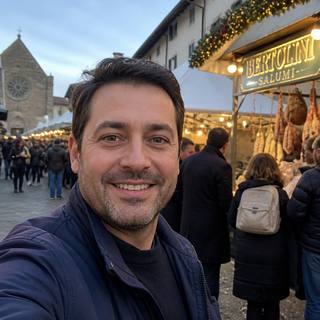
Strasbourg has billed itself as Capitale de Noël (Capital of Christmas) since the 1990s, and it genuinely lives up to it: 2026's market runs November 27 to December 27, spread across roughly nine individual markets throughout the Grande Île, each with its own character (crafts, food, or a specific theme). It's one of the oldest Christmas markets in France, dating back to 1570.
Visit on a weekday morning if you want to actually see the giant tree at Place Kléber and the market stalls without shoulder-to-shoulder crowds — weekends and evenings in December draw serious numbers. Book accommodation for a Christmas-season trip months ahead; Strasbourg's hotels sell out early for the market's peak weekends.
Alsatian food to try
| Dish | What it is | Approx. price |
|---|---|---|
| Tarte flambée (flammekueche) | A thin, crispy flatbread with crème fraîche, onions, and bacon | €9-14 ($10-15) |
| Choucroute garnie | Sauerkraut with sausages, pork, and potatoes — Alsace's signature dish | €16-24 ($17-26) |
| Baeckeoffe | A slow-baked casserole of marinated meats, potatoes, and vegetables | €15-22 ($16-24) |
| Kougelhopf | A bundt-shaped brioche cake studded with raisins and almonds | €3-6 ($3.25-6.50) |
Getting to Strasbourg
The direct TGV from Paris Gare de l'Est takes about 1 hour 50 minutes — one of the fastest Paris connections of any French regional city. Strasbourg also sits close enough to Germany and Switzerland that Frankfurt and Basel are both viable alternate gateways, and the compact old town is fully walkable, backed up by an efficient tram network for anything further out.
Mistakes worth avoiding
- Visiting in December without booking a hotel months ahead — Christmas-market-season accommodation sells out earlier here than almost anywhere else in France.
- Missing the noon astronomical clock show because you arrived at 12:29 — get to the south transept by noon at the latest, since the doors and viewing area fill up fast.
- Only seeing Petite France and skipping the European Quarter — the contrast between the two is genuinely part of what makes Strasbourg interesting.
Book early if you're visiting during Christmas market season
Compare Strasbourg hotelsWhere to stay in Strasbourg — hotels
Check live availability and prices for hotels, resorts, and guesthouses in Strasbourg on Booking.com:
Search hotels in Strasbourg on Booking.com ←We may earn a small commission, at no extra cost to you.